
· Feem Digitals · Analytics · 4 min read
Marketing Metrics Kenyan SMEs Can Actually Use
Connect ad spend, enquiries, sales follow-up, and revenue with a simple measurement system your team will maintain.
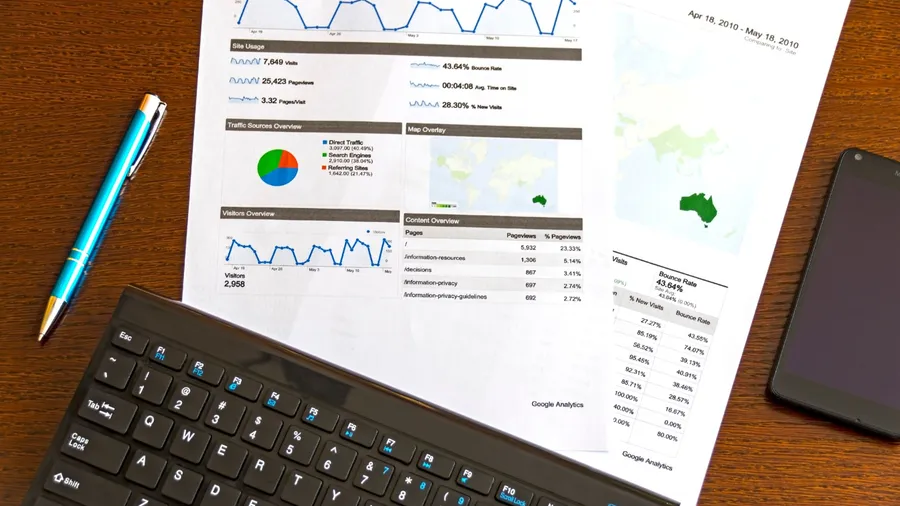
Marketing reports often contain plenty of platform data and very little commercial information. A business may know its impressions, clicks, and cost per message while remaining unsure which campaign produced qualified customers.
The solution is not necessarily a more expensive dashboard. It is a shared definition of the customer journey and a consistent way to record it.
Map the journey before choosing metrics
Start with the stages a customer passes through.
A service business might use:
- Website visitor.
- Enquiry.
- Qualified lead.
- Meeting or site visit.
- Proposal.
- Customer.
- Repeat customer.
An ecommerce business may use product view, add to cart, checkout, purchase, and repeat purchase.
Define each stage clearly. If one salesperson treats every WhatsApp greeting as a lead while another records only serious prospects, the report cannot support good decisions.
Use a small core scorecard
Most SMEs can begin with these measures:
Enquiries
The total number of new customer conversations generated in the period.
Qualified leads
Enquiries that match the agreed customer, need, budget, location, or timing criteria.
Cost per qualified lead
Marketing spend / qualified leads
This is usually more useful than cost per message because it accounts for lead quality.
Lead-to-customer rate
New customers / qualified leads x 100
This shows how effectively the sales process converts real opportunities.
Customer acquisition cost
Relevant sales and marketing cost / new customers
Decide which costs are included and keep the definition consistent.
Revenue and gross margin
Revenue shows the value sold. Gross margin gives a better view when products or services have very different delivery costs.
Return on ad spend
Revenue attributed to advertising / advertising spend
ROAS can be useful, but it does not include every business cost and should not be presented as profit.
Record the source in the sales process
Analytics tools cannot see every offline conversation, phone call, referral, or manually closed WhatsApp sale. The sales team needs a simple source field.
Use a controlled list such as:
- Google Search.
- Google Ads.
- Instagram.
- Facebook.
- TikTok.
- Email or SMS.
- Referral.
- Walk-in.
- Returning customer.
- Other.
Add campaign detail where useful, but do not make the form so complicated that staff stop completing it.
Campaign-specific landing pages, tracked links, pre-filled WhatsApp messages, promo codes, and dedicated form fields improve attribution. The final source should still be confirmed during follow-up when possible.
Track speed and follow-up
Marketing performance can be limited by operations after the lead arrives. Add a few process measures:
- First response time.
- Percentage of leads contacted.
- Percentage followed up on the agreed date.
- Proposal turnaround time.
- Main reason opportunities are lost.
If qualified leads are increasing but sales are flat, these measures help identify whether the problem is response capacity, pricing, sales skill, availability, or the offer itself.
Review weekly and monthly
Weekly reporting should support action. Keep it short:
| Metric | This week | Previous week | Action needed |
|---|---|---|---|
| Spend | |||
| Enquiries | |||
| Qualified leads | |||
| Customers | |||
| Cost per qualified | |||
| First response time |
The team should leave the review knowing which campaign to continue, which lead issue to investigate, and who owns the next action.
Monthly reporting can include revenue, acquisition cost, channel trends, conversion rates, and customer quality. It should also record context such as stock shortages, holidays, price changes, service interruptions, or unusual large orders.
Avoid false precision in attribution
Customers rarely move through a perfectly linear path. Someone may see an Instagram video, receive a recommendation, search the brand on Google, and then send a WhatsApp message.
Platform dashboards may each claim credit for the same customer. Treat attribution as a decision aid, not unquestionable truth.
Use a practical combination of:
- Tracked digital events.
- Customer-reported source.
- Sales records.
- Campaign timing.
- Incremental tests where possible.
Look for consistent patterns across these sources rather than arguing over a single perfect number.
Set decision rules before spending more
Agree on acceptable economics before a campaign scales.
For example:
- The maximum cost per qualified lead.
- The minimum customer conversion rate.
- The margin required after acquisition cost.
- The number of leads the sales team can handle.
- The test budget and review date.
These guardrails reduce emotional decisions based on one good day or a visually impressive report.
A 30-day measurement setup
Week 1
Define the funnel stages, owners, source list, and core metrics.
Week 2
Configure website analytics, conversion events, campaign parameters, and WhatsApp source messages.
Week 3
Create the lead tracker or customer relationship management fields and train the team on consistent entry.
Week 4
Review the first complete dataset, correct gaps, and agree on weekly actions.
A reliable measurement system is deliberately simple. It connects marketing activity to real customer progress and gives the team enough evidence to spend the next shilling more intelligently.
Need a reporting setup built around decisions rather than vanity metrics? Talk to Feem Digitals.